CDLL6332 Microchip Technology
CDLL6332 by Microchip: Trusted Zener Diodes for High-Reliability Embedded and Industrial Power Management
In today’s rapidly evolving electronic systems, power efficiency and reliability are critical factors in embedded and industrial applications. Whether in IoT devices, automotive electronics, or medical equipment, components must withstand harsh operating conditions while maintaining stable performance over long periods. Among these essential components, Microchip’s CDLL6332 stands out as a high-reliability single Zener diode designed specifically for demanding power management needs.
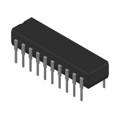
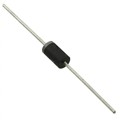

The CDLL6332 is part of Microchip’s Diodes – Zener – Single family, engineered to provide precise voltage regulation with minimal power loss. Unlike traditional passive components, this diode integrates advanced semiconductor technology to ensure stable operation across varying temperatures and voltage fluctuations. Its design optimizes efficiency, making it ideal for applications where energy conservation is crucial—such as battery-powered IoT sensors or energy-efficient industrial controllers.
Key Advantages of the CDLL6332 for Modern Embedded Systems
One of the most notable features of the CDLL6332 is its high breakdown voltage stability, ensuring consistent performance even under extreme conditions. This diode is particularly well-suited for applications requiring precise voltage reference points, such as microcontroller power regulation or signal conditioning in industrial automation. Its low forward voltage drop further enhances power efficiency, reducing heat generation and extending battery life in portable devices.
Additionally, the CDLL6332 exhibits excellent thermal performance, making it reliable in high-temperature environments common in automotive and industrial settings. Its compact package design also facilitates easier integration into compact PCB layouts, a key consideration in embedded systems where space is limited. For engineers focused on low-power design, this diode’s minimal leakage current further reduces energy consumption, aligning with the demands of modern IoT and smart device architectures.
Industrial and Embedded Applications Where CDLL6332 Excels
The versatility of the CDLL6332 makes it a valuable component in several critical industries. In industrial automation, where sensors and PLCs must operate reliably under varying conditions, this diode ensures stable power delivery to control circuits. Similarly, in automotive electronics, its robustness helps maintain voltage integrity in harsh environments, from extreme temperatures to rapid voltage transients.
For IoT devices, such as smart meters or wearable sensors, the CDLL6332’s efficiency in power management is invaluable. By minimizing energy waste, it extends battery life while maintaining performance, a critical factor in cost-sensitive consumer and industrial IoT solutions. In medical electronics, where precision and reliability are non-negotiable, this diode’s stable voltage regulation supports critical applications like ECG monitoring and diagnostic equipment.
Why Microchip’s CDLL6332 Stands Out Compared to Competitors
When comparing the CDLL6332 to alternatives from leading semiconductor manufacturers like Texas Instruments, NXP, or STMicroelectronics, several key differences emerge. While competitors may offer similar voltage regulation capabilities, Microchip’s diode excels in consistent performance across a broader temperature range, reducing the need for additional protective circuitry. Its integrated design also simplifies PCB layout and reduces component count, a significant advantage in cost-sensitive applications.
Moreover, Microchip’s reputation for long-term reliability and rigorous testing ensures that the CDLL6332 meets stringent industrial and automotive standards. Unlike some competitors that may require additional derating for extreme conditions, Microchip’s diode is engineered to perform reliably under real-world stress, making it a preferred choice for engineers prioritizing durability and predictability.
Supply
구입하다 CDLL6332 ?
ICHOME은 고객이 신뢰할 수 있는 독립적인 전자 부품 유통업체가 되기 위해 최선을 다하고 있습니다.
BOM 비용 절감 | 구하기 힘든 부품

구입하다 CDLL6332 ?
ICHOME은 고객이 신뢰할 수 있는 독립적인 전자 부품 유통업체가 되기 위해 최선을 다하고 있습니다.
BOM 비용 절감 | 구하기 힘든 부품